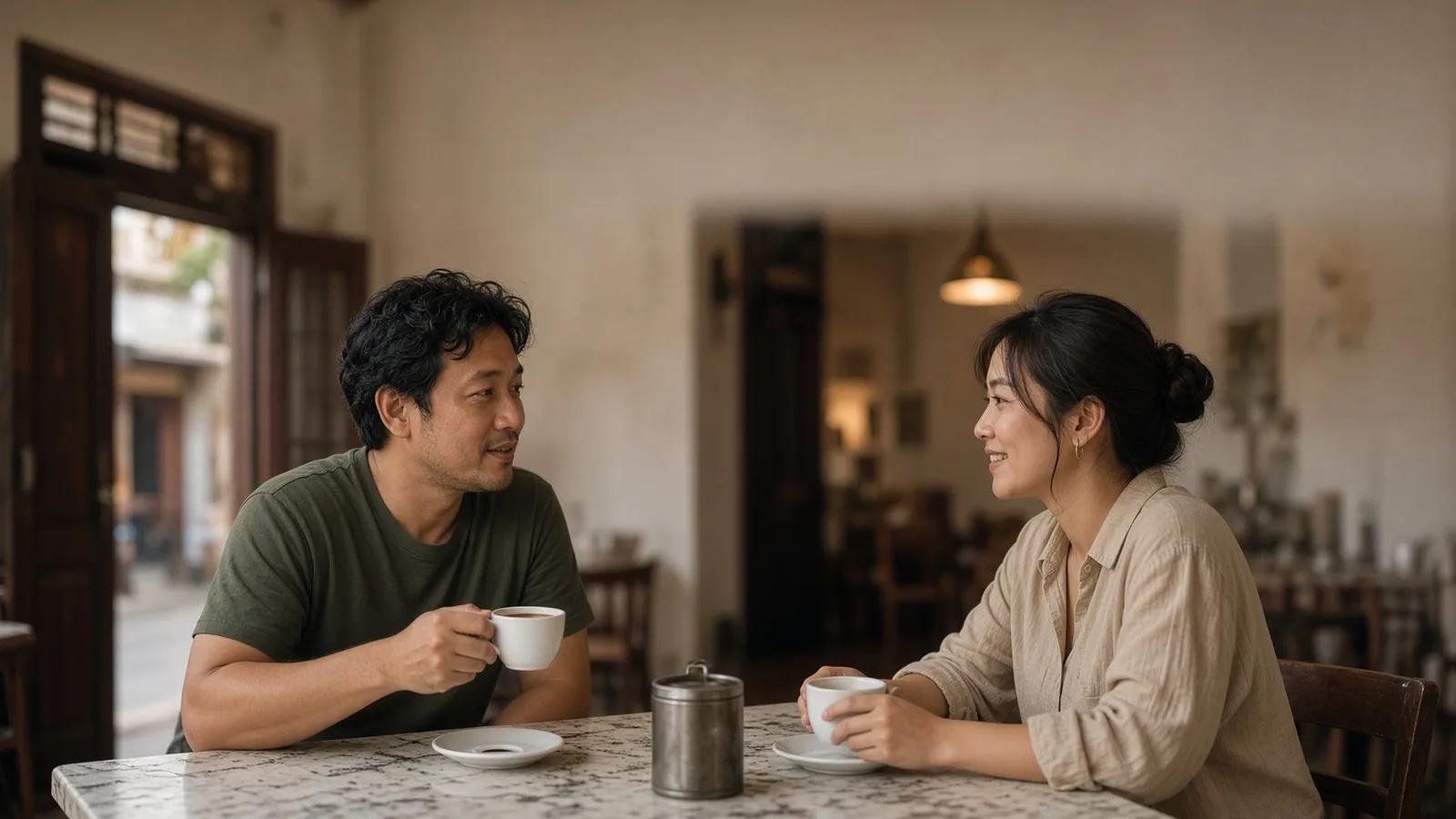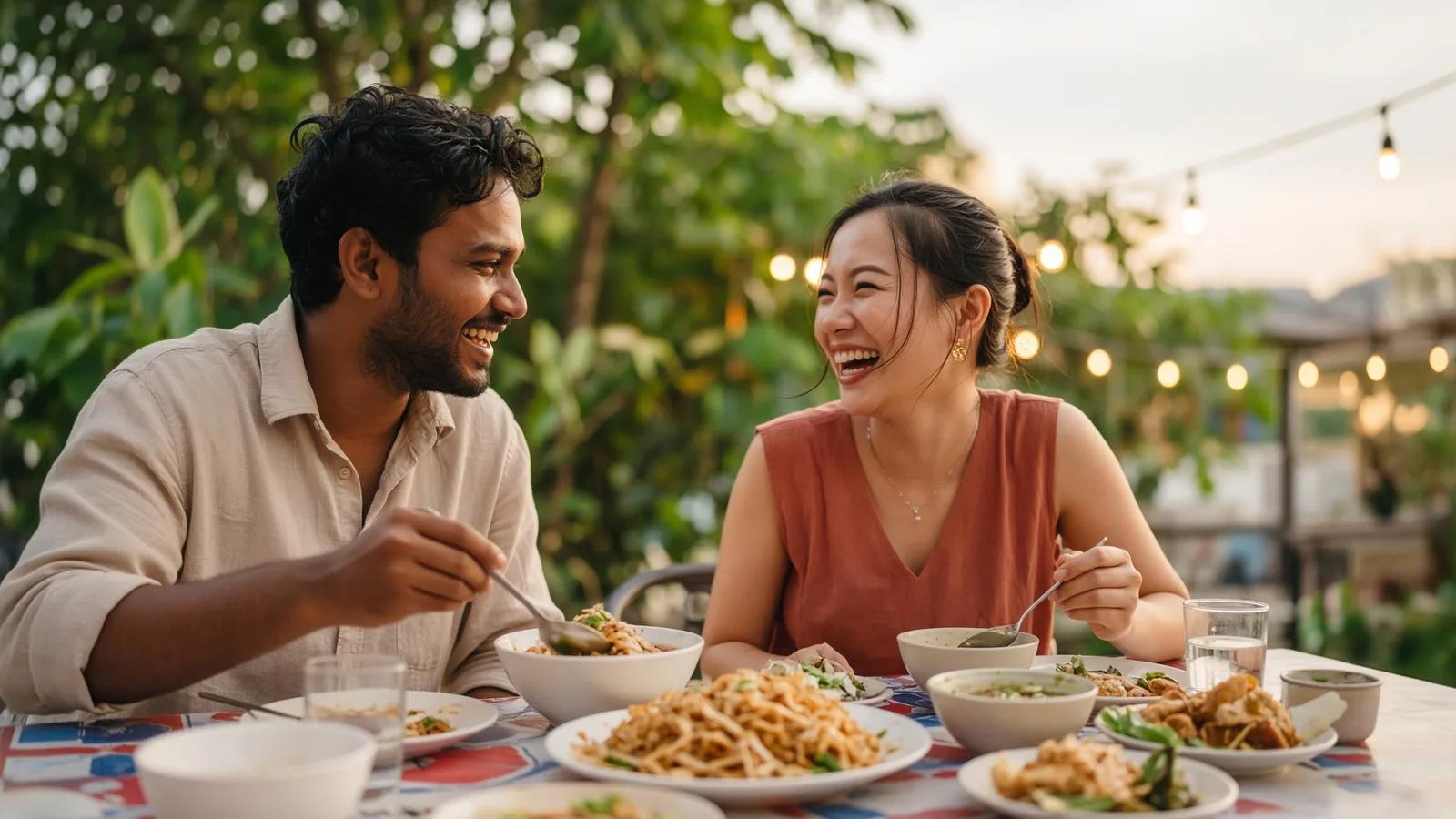
Roughly one in five marriages involving a Singapore citizen is now between people of different ethnic groups. In 2024 the proportion of inter-ethnic marriages among citizen marriages reached 19.2 per cent, according to the Singapore Department of Statistics, up from under 6 per cent four decades earlier. Add transnational marriages, where one partner is not a citizen, and the share climbs past a third.
So if you are dating across a cultural, ethnic or religious line in Singapore, you are not doing something unusual. You are doing something common that still comes with specific, predictable challenges, most of which have less to do with the two of you than with everyone around you. This guide covers those challenges honestly, and the practical ways couples here handle them.
What the numbers actually say
Singapore classifies its population under the CMIO framework, Chinese, Malay, Indian and Others, and tracks marriages between those groups as "inter-ethnic." Three things in the data matter for anyone dating across lines.
The trend is steep and steady. Inter-ethnic marriages went from 5.8 per cent of citizen marriages in 1984 to 19.2 per cent in 2024, with 4,407 such marriages that year. The social question has shifted from "whether" to "how."
Transnational marriage is even more common. 36.6 per cent of citizen marriages in 2024 involved a non-citizen spouse. Cross-cultural dating in Singapore is at least as often about nationality as about ethnicity, which is why our expat dating guide is a companion to this one.
It is now a mainstream path, not an exception. A fifth of your friends' weddings will cross an ethnic line. Grandparents who remember when that was rare are now a minority of the people whose opinion you will encounter. Full context in our Singapore dating statistics report.
Where the friction actually comes from
Couples themselves rarely report the differences as the problem. The friction tends to come from four predictable places.
Family
This is the big one, and it is worth being clear-eyed about it. Parents and grandparents may have assumptions about language, food, faith, how grandchildren will be raised, and which family's traditions take precedence. Some of those assumptions are stated; many are not, and show up as a cooler reception than you expected.
What works is time and visibility rather than argument. Families come around by seeing a partner show up, repeatedly, respectfully, at the things that matter, Chinese New Year, Hari Raya, Deepavali, a grandparent's birthday, rather than by being persuaded in a single conversation. The partner who learns ten words of the family's language and eats what is served has done more than any speech could.
Religion
In Singapore, religion is the line that carries the most practical weight, because it touches marriage law, children, and daily life. If one partner is Muslim, the questions of conversion, of whether to solemnise at the Registry of Muslim Marriages or the Registry of Marriages, and of how children will be raised are not abstract; they shape the entire path. Similar, if less legally formal, questions arise for devout families of any faith.
The only rule here is early and honest. These conversations need to happen before the relationship is deep enough that the answer feels like a betrayal either way. If the answer is "I would never convert" or "my family would not accept a non-Buddhist wedding," that is important information for date six, not year three.
Food, language and daily life
The small, constant differences that are easy to joke about and surprisingly tiring to live with. Halal and non-halal kitchens. Whose mother tongue the children learn. Whether a festival means a week off or a passing nod. Whether "spicy" means the same thing.
None of these end relationships. All of them require explicit negotiation rather than assumption, and the couples who do well treat each one as a small design problem rather than a loyalty test.
Other people's commentary
Singapore is polite in public and candid in private, and cross-cultural couples hear a lot of the candid version: assumptions about why you chose each other, jokes about your children's appearance, questions about whether it is "serious." Most of it is clumsy rather than malicious. Deciding together, in advance, how you will respond, and agreeing that neither of you has to defend the relationship to strangers, removes most of the sting.
The practical playbook
Talk about the big three before the relationship is serious. Religion, children, and family expectations. Not as an interrogation on date two, but by month three or four, in plain language. Our dating in Singapore after 30 playbook covers how to raise direction without making it an interview; the same approach applies here with higher stakes.
Meet the family early, in low-stakes settings. A meal, a festival, a casual drop-in. Earlier than feels comfortable, and more often than feels necessary. Familiarity is the only thing that reliably softens assumptions.
Learn the basics of each other's traditions, properly. Which days matter, what is served, what is and is not done. The effort is noticed by the family long before it is noticed by your partner.
Decide what you will keep, what you will blend, and what you will let go. Weddings in particular: a tea ceremony and a nikah, or one ceremony for each family, or a civil solemnisation with elements of both. There is no correct configuration. There is only the one you both chose on purpose.
Agree on children before you need to. Names, languages, religion, which school system. These are the questions grandparents ask and the ones couples most often avoid.
Protect the relationship from the commentary. You are allowed to find other people's opinions boring. The relationship is the two of you; everyone else is context.
Build a circle that reflects you. Friends who are also in cross-cultural relationships are an underrated resource, because they have already solved problems you are about to meet.
Dating across lines: where to start
If you are single and open to dating across cultural or ethnic lines, three things help.
Be specific about what matters to you. If faith is non-negotiable, say so; it saves everyone time. If it is not, say that too, because many people assume the opposite from a surname.
Meet in mixed settings. Interest groups, run clubs, climbing gyms, volunteering and professional networks are naturally more mixed than most friend circles, which is one reason they produce so many cross-cultural relationships. The channel list in how to meet singles in Singapore is organised by yield.
Use platforms that show intent, not just faces. On SingCupid, every member states what they are looking for, friendship, casual dating, a serious relationship, or an activity partner, and the "about my match" preferences let you describe what matters to you rather than filtering on appearance. Browsing is by region, so a match in Central, the East, the North-East or the North is someone you can actually meet this week, and there is no premium tier. The group chats and forums are organised by region and interest rather than by anything else, which is how most cross-cultural connections happen offline anyway: over a shared hobby, sideways.
What cross-cultural couples in Singapore say helps most
Not research, but a consistent pattern in what couples describe:
- Humour about the differences, not about each other. The couples that last laugh at the logistics, not at the person.
- One shared festival of your own. Many couples invent a tradition that belongs to neither family, a specific trip, a specific meal, so that something is purely theirs.
- A united front with families. Disagreements between the two of you stay between the two of you. In front of either family, you are one unit.
- Letting the children lead. Children of mixed families in Singapore tend to be entirely unbothered by what their grandparents found complicated. Trust that.
Frequently asked questions
How common is interracial dating in Singapore? Very. 19.2 per cent of citizen marriages in 2024 were inter-ethnic, and 36.6 per cent were transnational. Cross-cultural relationships are a mainstream path.
What is the biggest challenge in cross-cultural relationships in Singapore? Family expectations, followed by religion. Couples themselves rarely report the cultural differences as the main difficulty; the pressure usually comes from outside the relationship.
When should I talk about religion with a partner from a different faith? Early. By the third or fourth month, in plain language, before the relationship is deep enough that the answer feels like a betrayal either way.
Can a Muslim and a non-Muslim marry in Singapore? The path depends on whether the non-Muslim partner converts and on which registry the couple uses. It is one of the most important early conversations for mixed-faith couples, and worth seeking proper guidance on rather than assuming.
How do I handle a family that does not approve? Time, visibility and respect, more than argument. Show up at the things that matter, learn the basics of their traditions, and let familiarity do the work.
Where do cross-cultural couples meet in Singapore? Mixed settings: interest groups, sports, volunteering, professional networks, and dating platforms that let you state what matters rather than filtering on appearance.
Singapore's whole premise is that people from different backgrounds can build something durable together. A relationship that crosses those lines is not a departure from that premise; it is the premise, at the scale of two people. Creating a free profile that states what you are looking for is one way to start.
Figures from the Singapore Department of Statistics, Number and Proportion of Inter-Ethnic and Transnational Marriages Among Citizen Marriages (data.gov.sg).