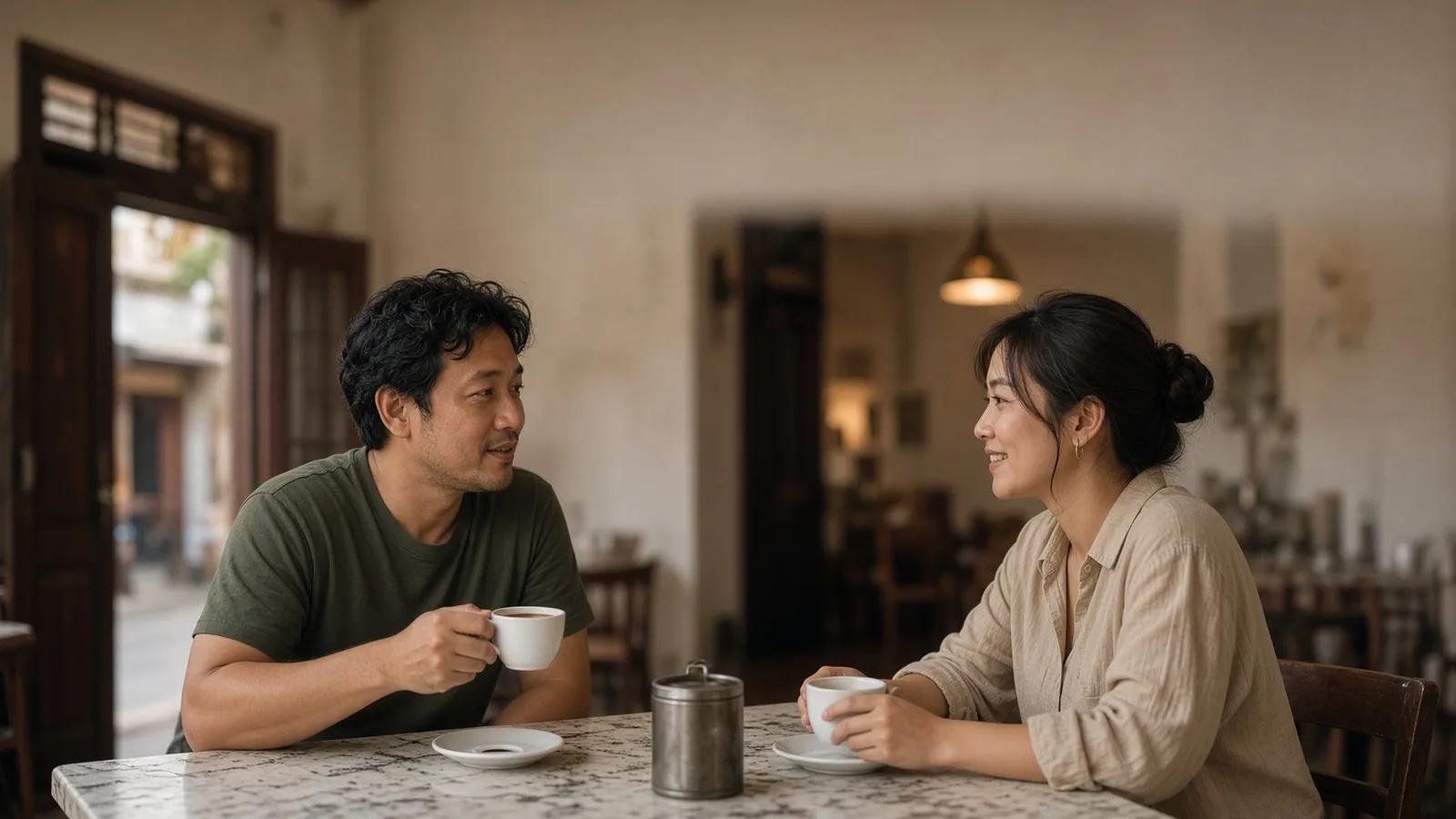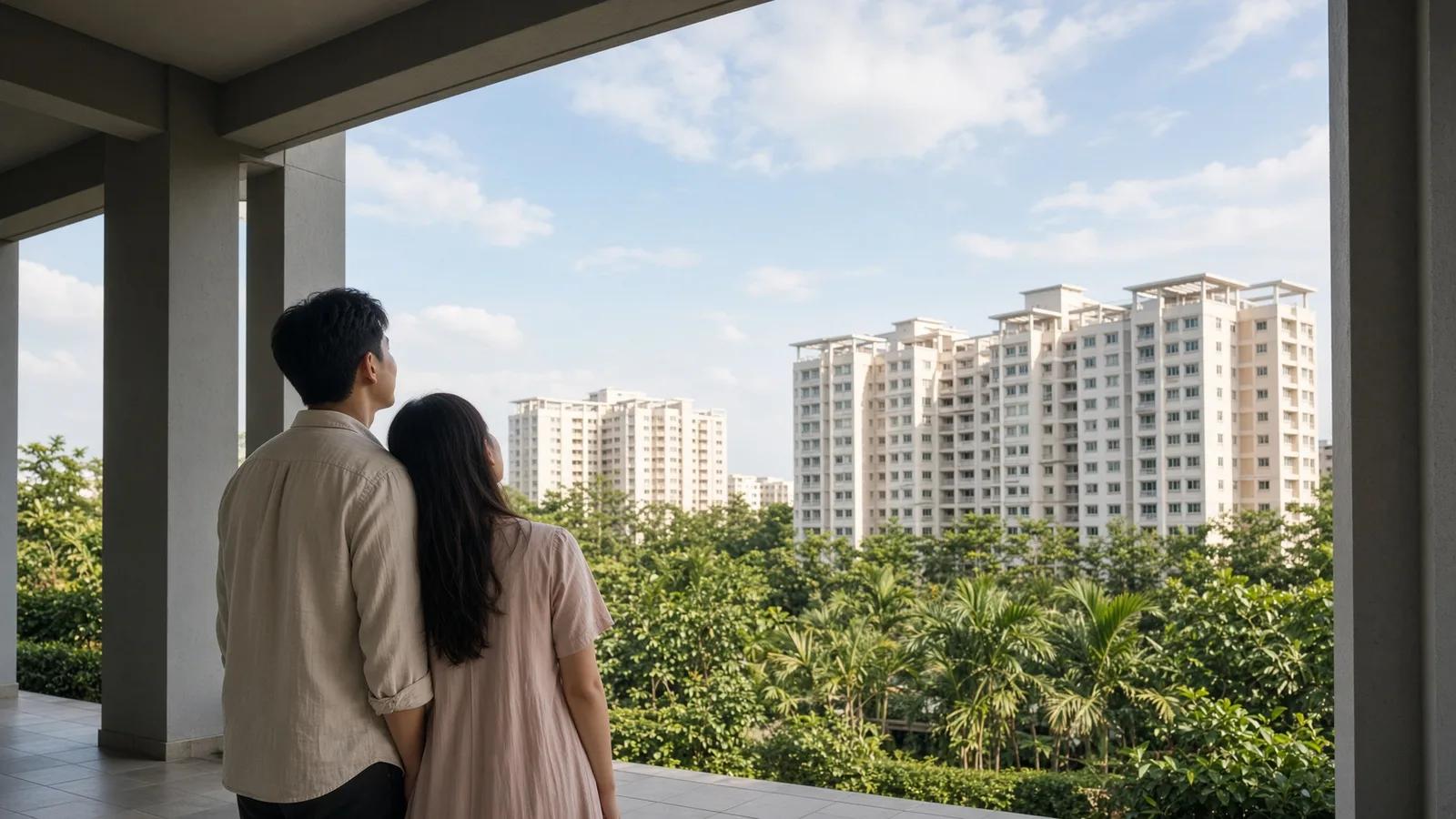
In most countries, the question that changes a relationship is "will you marry me?" In Singapore, it is often "shall we BTO?"
If you did not grow up here, that sentence needs explaining. If you did, you already know that four letters can carry more weight than a diamond ring, and that a housing application is where a lot of Singaporean relationships quietly become serious, or quietly end. This guide explains how the system works, why it shapes dating so profoundly, and how to handle the conversation without wrecking a good relationship or sleepwalking into a bad one.
What a BTO actually is
BTO stands for Build-To-Order. It is the Housing and Development Board's scheme for new public flats: you apply for a flat in an upcoming development, ballot for a queue number, select a unit if your number comes up, and then wait while it is built. Roughly 80 per cent of Singapore residents live in HDB flats, and a BTO is the most affordable way into one, with CPF housing grants that can run to tens of thousands of dollars for eligible first-timers.
The part that matters for dating is eligibility. A single Singapore citizen cannot apply for a BTO flat alone until the age of 35, and then only for a 2-room Flexi unit. A couple, however, can apply from the age of 21 under the Fiancé/Fiancée Scheme, with no requirement to be married at the point of application. The condition is that you produce a marriage certificate within three months of collecting the keys.
Those keys typically arrive three to five years after application.
So the system, in effect, offers two people in their mid-twenties a subsidised home on the condition that they commit now and marry by the time it is built. That is the entire reason "shall we BTO" became a proposal.
Why BTO became the Singaporean proposal
Three forces push in the same direction.
The age rule. Waiting until 35 to buy alone means a decade of renting or living with parents. Applying as a couple at 25 means owning at 29. For many Singaporeans the housing logic simply outruns the romantic one.
The waiting time. Because the flat takes years to build, you have to apply well before you would otherwise be ready to marry. Singapore's median age at first marriage in 2025 was 31.1 for grooms and 29.6 for brides. If you want to move into your own place around then, the application has to go in around 26 or 27, which is often two or three years into a relationship.
Family and cultural expectation. Applying for a flat together is a public, visible, parent-approved declaration of intent in a culture where living together before marriage remains uncommon. It functions as an engagement without the awkwardness of a proposal, which is both its appeal and its problem.
The result is a uniquely Singaporean life sequence: date, BTO, ROM (register the marriage), renovate, wedding banquet, move in. In that order, often across five years.
What it means for dating
The BTO system reshapes the entire timeline of a relationship here, and anyone dating in Singapore, local or expat, should understand the following.
Intent conversations arrive early. Because the housing clock runs on a schedule that has nothing to do with feelings, Singaporeans in their late 20s tend to raise direction questions within the first few months. This is not pressure for its own sake. It is someone checking whether a four-year plan is possible before they invest in it. Our dating in Singapore after 30 playbook and the etiquette guide both cover how to handle this with grace.
The "BTO or break up" moment is real. Around year two or three of a relationship in your mid-twenties, the application window often forces a decision that would otherwise drift for years. Plenty of couples who would have stayed together comfortably but indefinitely break up at this point. Plenty of others who were not quite ready apply anyway. Neither outcome is obviously wrong.
Expats face a specific mismatch. Foreign partners cannot be co-applicants on a BTO unless the citizen partner is at least 35 and the couple applies under the Non-Citizen Spouse Scheme, which is restricted to 2-room Flexi flats. For a Singaporean dating a foreigner, this quietly removes the standard path, and it is worth both people understanding that before anyone feels blindsided. See our expat dating guide.
Singles over 35 play a different game. From the August 2024 sales exercise onwards, singles aged 35 and above can apply for 2-room Flexi flats in both mature and non-mature estates, which was a meaningful expansion of where singles could buy. For a growing number of Singaporeans, the realistic path is to buy alone at 35 and date without the housing clock attached. Our guide to dating after 40 describes how that changes the dynamic.
How to have the BTO conversation
The mistake is treating it as either a romantic proposal or a pure financial decision. It is both, and the couples who navigate it well hold both at once.
Separate the two questions. "Do we want to spend our lives together?" and "Should we apply for this launch?" are different questions with different timelines. Answer the first before the second. A BTO is a terrible way to find out whether you want to marry someone.
Talk about money before you talk about location. Combined income ceiling for most flats is S$14,000, grants depend on income, and the loan will follow you both for decades. Know each other's savings, debts and CPF balances before you look at a site plan.
Agree on what happens if it ends. Unromantic, necessary. If a couple splits before key collection, the application can be cancelled, but fees already paid may be forfeited and, depending on the stage, a waiting period applies before either person can apply again. Knowing that upfront prevents one person feeling trapped by sunk cost later.
Do not let the launch calendar pick the person. Every BTO sales exercise creates a deadline, and deadlines make people commit to whoever is in front of them. If the relationship is good, missing one launch costs you a few months. If the relationship is wrong, catching the launch costs you years.
Involve families early, but decide as a couple. Parents will have views on location, size and timing. Hear them, then decide between the two of you. It is your flat and your marriage.
If you are dating and nowhere near this stage
Most people reading this are not about to apply for anything. They are single, or early in something, and trying to understand a dating culture where housing lurks behind every intent conversation. Three things help.
Be clear about your own direction, even if the answer is "not for a few years." On SingCupid every member states their objective at registration, friendship, casual dating, a serious relationship, or an activity partner, and it displays on the profile. In a dating culture shaped this heavily by timelines, knowing someone's direction before the first message saves everyone the awkward date-three conversation.
Date near where you actually want to live. It sounds trivial, but a couple who both want to end up in the East has an easier BTO conversation than one split between Woodlands and Bedok. Browsing by region, Central, East, North-East or North, is partly a dating convenience and partly, years later, a housing one.
Let the relationship set the pace, not the ballot. The couples who last are rarely the ones who applied earliest. They are the ones who knew each other well enough that the application was a formality rather than a test.
Frequently asked questions
What does "let's BTO" mean? It is a Singaporean way of proposing, or at least of proposing to get engaged. Applying for a Build-To-Order flat together under the Fiancé/Fiancée Scheme commits a couple to marrying by the time the flat is completed.
Can an unmarried couple apply for a BTO flat in Singapore? Yes, under the Fiancé/Fiancée Scheme, from age 21. A marriage certificate must be produced within three months of key collection.
How long after applying for a BTO do you need to get married? By key collection, with a three-month window after keys are issued. Since construction typically takes three to five years, most couples register their marriage somewhere in that period.
What happens to a BTO if the couple breaks up? The application can be cancelled before key collection. Fees paid may be forfeited and a waiting period may apply before reapplying, depending on how far along the process is. Check the current HDB terms for your specific stage.
Can a single person apply for a BTO? From age 35, for a 2-room Flexi flat, in both mature and non-mature estates since August 2024.
Can a Singaporean apply for a BTO with a foreign partner? Not under the standard schemes. The Non-Citizen Spouse Scheme requires the citizen to be at least 35 and limits the couple to 2-room Flexi flats.
Is it a bad sign if my partner has not brought up BTO? Not necessarily. Some people are not ready, some are not interested in a BTO at all, and some are waiting for you. Ask directly; it is a far better conversation than guessing.
The BTO system is one of the most distinctive things about dating in Singapore, and one of the most misunderstood. It is not romantic, and it was never designed to be. But it does something almost no other country's housing policy does: it asks couples to be honest about the future, early. Handled well, that honesty is a gift. Starting with a profile that states what you are looking for is free, and it makes the whole timeline simpler.
Housing rules change. Figures and eligibility above reflect HDB policy as at October 2026; confirm current terms at hdb.gov.sg before applying.